Americans with steady passive income, such as Social Security, a pension, dividends, interest or rent, can qualify for the Portugal D7 visa. For US citizens in 2026, the minimum is €920 a month for yourself (about $1,030), plus extra for a spouse or children. You apply through VFS Global in the US, then get your residence permit from AIMA in Portugal.
This guide covers the income rule in dollars and euros and the paperwork Americans most often get stuck on (the apostilled FBI check and the Portuguese bank account). It walks through each step from your home state to your residence card, plus the US tax filings that follow you abroad. Dollar figures use about $1.12 per €1, the ECB reference rate in late October 2026.
Key facts at a glance
| Item | 2026 rule |
|---|---|
| Minimum income, single applicant | €920 a month (€11,040 a year), about $1,030 a month |
| Spouse or other extra adult | Plus €460 a month |
| Each child or dependent | Plus €276 a month |
| Savings in Portugal (Washington, D.C. checklist) | 12 minimum wages, €11,040 for one person |
| Consular visa fee | About €110, not refunded if refused |
| Consular decision time | Up to 60 days |
| D7 entry visa | Two entries, 4 months (120 days) |
| AIMA first permit fee | €185.60 reduced rate or €247.30 standard rate |
| Residence permit length | 2 years, then renewed for 3 years |
| Permanent residence | After 5 years of legal residence |
| Citizenship for Americans | 10 years of legal residence (since 19 May 2026) |
Rules and fees change often. Confirm against the Embassy of Portugal in Washington / VFS Global USA checklist and aima.gov.pt before you file.
How much income do US citizens need for the Portugal D7 visa in 2026?
The D7 income test is tied to Portugal's minimum wage. On 1 January 2026, the mainland minimum monthly wage rose from €870 to €920 under Decreto-Lei 139/2025. The D7 scale gives the first adult 100% of that, each extra adult 50% (€460) and each minor or dependent 30% (€276), according to Grow in Portugal. The Azores minimum is €966 and Madeira's is €968, so those amounts may apply if you settle on the islands.
Here is what that means in dollars at about $1.12 per €1. Greenback Expat Tax Services put the single minimum at about $1,050 in September 2026, but the dollar has since strengthened against the euro (the ECB reference rate was about 1.12 on 21 October 2026, down from about 1.15 in September). Treat every dollar figure as approximate and check the live rate.
| Household | Monthly (€) | Yearly (€) | Monthly (approx. $) | Yearly (approx. $) |
|---|---|---|---|---|
| Single | €920 | €11,040 | $1,030 | $12,360 |
| Couple | €1,380 | €16,560 | $1,546 | $18,550 |
| Couple plus 1 child | €1,656 | €19,872 | $1,855 | $22,260 |
| Couple plus 2 children | €1,932 | €23,184 | $2,164 | $25,970 |
Portaria 1563/2007 describes the minimum wage as net of social security contributions, but consulates use the published €920 figure. Older UK consular checklists say the requirement can be halved if housing is provided, and cut by up to 90% if food is also provided (VFS Global, Manchester D7 checklist). That wording dates from 2024, so don't count on these reductions unless your US consulate confirms them.
Worked example: a retired couple from Arizona
Carol and Jim receive a combined $2,300 a month in Social Security and about $200 a month in dividends. That comes to $2,500 a month, or $30,000 a year.
- At $1.12 per €1, $2,500 is about €2,232 a month.
- The couple benchmark is €1,380 a month, which leaves a cushion of about €852.
- Per year, that is about €26,786 against a required €16,560.
- If the dollar weakens to $1.25 per €1, their $2,500 becomes €2,000, which still clears the bar.
They also need savings in a Portuguese account. Under the Washington checklist that is €11,040, about $12,360, for one person. Ask your consulate whether the amount rises for a couple, and transfer a little extra to cover fees and exchange swings.
Does Social Security count as passive income for the D7?
Yes. Pensions, including US Social Security, count as qualifying passive income, and so do rental income, dividends, interest and royalties. The income must be regular, documented and expected to continue. One-off gains, or savings on their own, are not enough (visas.pt).
A Social Security award letter plus bank statements showing the deposits is the cleanest proof for most retirees. As a practical tip, many applicants show 6 to 12 months of steady payments. Check what your consulate expects.
D7 vs D8 visa for remote workers
A remote salary counts as active income, not passive. The D8 digital nomad visa is designed for remote workers and requires about four times the minimum wage, roughly €3,680 a month in 2026, according to Grow in Portugal. If your investment or rental income meets the D7 threshold on its own, you can use the D7 instead.
| Feature | D7 (passive income) | D8 (digital nomad) |
|---|---|---|
| Main income type | Pensions, Social Security, rent, dividends, interest, royalties | Remote salary or freelance income |
| 2026 minimum, single | €920 a month | About €3,680 a month |
| Best fit | Retirees, investors, landlords | Employees and freelancers working remotely |
For the remote worker route, see our guide on the difference between a Portuguese TRC and the digital nomad visa.
Portugal D7 visa requirements for Americans: the document list
A typical D7 file for an American includes the following, according to Oliveira Lawyers:
- Completed national visa application form
- Valid passport
- Two passport photos
- FBI background check with a Hague Apostille
- Travel or health insurance covering urgent care and repatriation
- Proof of 12 months of secured accommodation in Portugal
- Proof of passive income
- A signed statement explaining why you are moving
FBI background check and apostille
US citizens, and anyone who has lived in the US for more than a year, need an FBI Identity History Summary with a Hague Apostille from the US Department of State. Many consulates want it issued within about 90 days of submission and translated into Portuguese (Globeia). Sources quote windows of 60 to 90 days, so the one on your consulate's checklist is the one that counts.
Portuguese bank account and the 12-month savings
The current English checklist from the Embassy of Portugal in Washington, D.C., dated 10 November 2025 and also used by VFS Global USA, asks for funds equal to 12 minimum wages held in a Portuguese bank account, plus your NIF (Portuguese tax number). The national gov.pt D7 page reportedly does not make a Portuguese account a universal requirement (Europe Simple). Follow your own consulate's list.
Getting a NIF and bank account from the US
You usually don't need to fly to Portugal for these. In general practice, Americans get a NIF remotely through a fiscal representative or a NIF service provider, and some Portuguese banks open accounts for non-residents remotely. Rules differ, so confirm the NIF steps on Portal das Finanças and ask the bank directly which ID and proof of address it accepts.
Housing and health insurance
You need proof of accommodation for 12 months. A short hotel booking will not be accepted. A 12-month lease is the usual choice, and you do not have to buy property.
Medicare does not cover care in Portugal. Retirees are commonly advised to keep Medicare Part A as a backstop and add Portuguese private or international cover (Retire Destinations). The visa application also requires valid insurance.
How to apply for the Portugal D7 visa from the United States
Americans file through VFS Global centers that serve the Portuguese consulates, including Washington DC, New York, Boston, San Francisco, Los Angeles, Chicago, Houston and Miami. Which one you use depends on your state of residence (Greenback Expat Tax Services). Check the VFS Global USA Portugal page to find the jurisdiction for your state.
- Confirm your income clears the 2026 threshold for your household, with a buffer for exchange-rate changes.
- Get your NIF and open a Portuguese bank account, then transfer the 12-month savings if your checklist asks for it.
- Sign a 12-month lease in Portugal. If you can, negotiate a clause that lets you exit the lease if your visa is refused.
- Buy health or travel insurance that covers urgent care and repatriation.
- Request your FBI Identity History Summary, have the US Department of State apostille it, then get a Portuguese translation.
- Collect income proof: Social Security award letter, pension statements, brokerage or rental records, and bank statements.
- Write and sign your statement explaining the move.
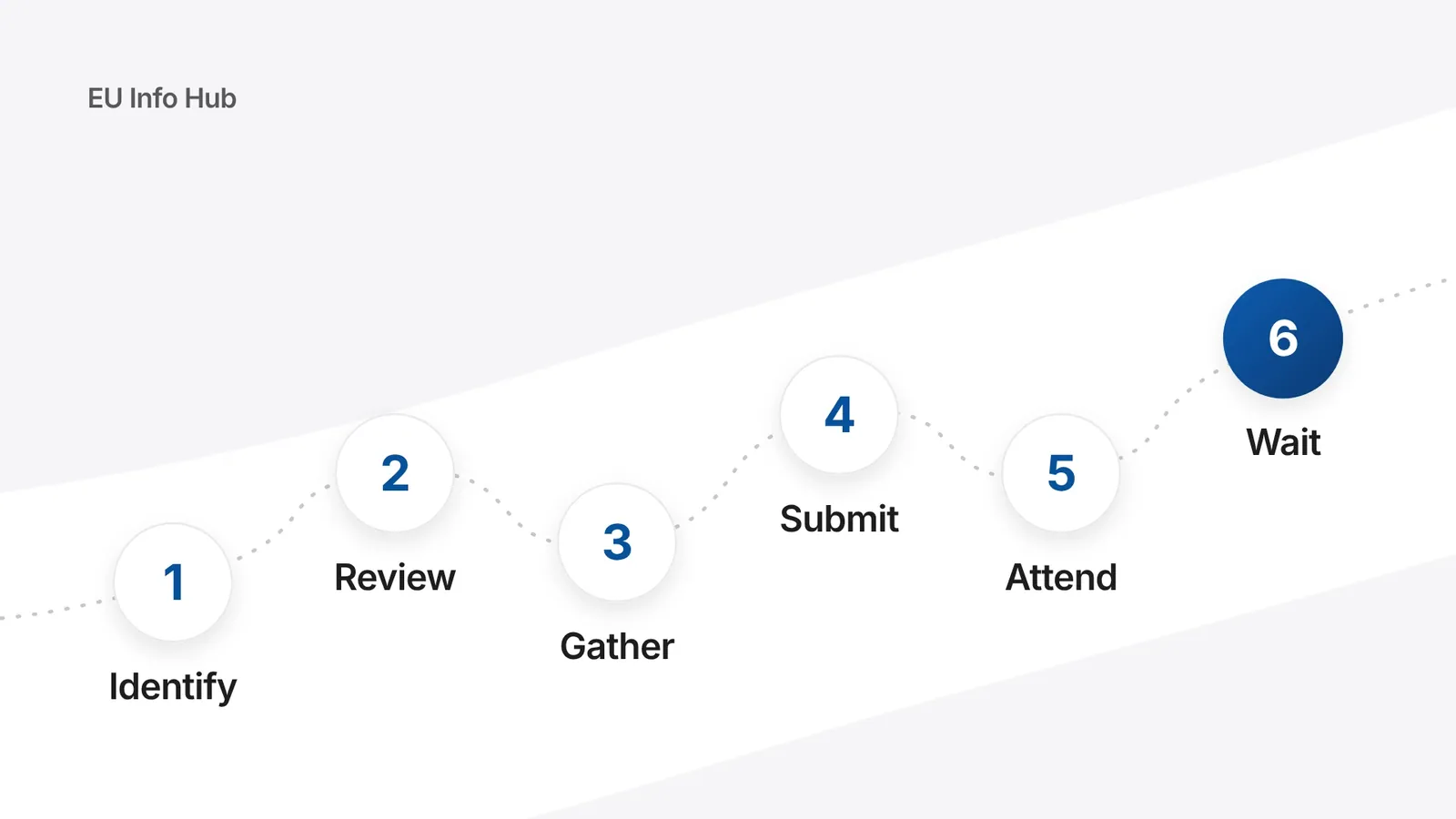
- Attend your appointment at the VFS Global center for your state and pay the visa fee of about €110 (some sources say €90 to €110). It is not refunded if you are refused.
- Wait for the decision, which can take up to 60 days (Europe Simple).
- Enter Portugal on the D7 entry visa and attend your AIMA appointment.
Worked timeline with real dates
Say your apostilled FBI check is dated 5 November 2026 and your consulate allows 90 days. You must submit by about 3 February 2027. If you file at VFS on 15 January 2027 and the consulate takes the full 60 days, your decision arrives around 16 March 2027.
The D7 entry visa allows a 120-day stay. Confirm your AIMA appointment as early as you can. With current backlogs it may not fall inside that window, so keep your appointment confirmation and check with AIMA or an immigration lawyer what applies to you. Reported timelines from VFS filing to residence card range from about 6 months to more than a year, and AIMA's legal 90-day deadline is often exceeded in practice.
What happens after you arrive: the AIMA residence permit
The D7 entry visa does not make you a resident on its own. It is a two-entry visa for a 4-month stay that lets you enter Portugal and attend your AIMA biometrics appointment. The first permit lasts 2 years, then renews for 3 years (Rona Legal).
The complete file rule
Since 28 April 2025, AIMA has applied a "complete file" rule. The old 10-day window to send missing documents is gone, and an incomplete file at the appointment is rejected (Rona Legal). Bring originals and copies of everything, including updated bank statements and your lease. Our Portugal residence card step-by-step checklist can help.
Fees and decision times
For a first temporary permit in 2026, AIMA charges €247.30 at the standard rate or €185.60 at the reduced rate that currently applies to most applications. AIMA must decide within 90 days, and since Law 62/2026 (10 September 2026) it can extend that by 30 days in exceptional cases (visas.pt). AIMA raised its fees in March 2026 and other sources quote different amounts, so check aima.gov.pt before you pay.
Real waits vary widely, and Rona Legal describes a backlog of more than 400,000 files. For booking tips, read how to book an AIMA appointment for a residence card, and see the new requirements for Portugal TRC documentation.
If you are refused
The consular visa fee is not refunded after a refusal. You can reapply with a corrected file, so read the refusal reason closely and fix exactly that point. At the AIMA stage, an incomplete file is rejected outright, so check every document before your appointment.
US taxes for Americans living in Portugal on a D7
US citizens are taxed on worldwide income wherever they live, so you keep filing Form 1040. Double taxation is handled through the Foreign Tax Credit (Form 1116) and the US to Portugal tax treaty. File an FBAR (FinCEN 114) if your foreign accounts total more than $10,000 at any point in the year. For single filers abroad, Form 8938 applies above $200,000 at year-end or $300,000 at any time (Greenback Expat Tax Services).
Your D7 savings count toward the FBAR total. €11,040 is already above $10,000, so most D7 holders will need to file one.
Why the FEIE does not help most retirees
The Foreign Earned Income Exclusion (Form 2555) covers only pay for personal services. The IRS says pension and annuity income, including Social Security, is not foreign earned income (IRS international tax FAQs, IRS Foreign earned income exclusion). Remote earners can apply the FEIE to wages or self-employment income only. The 2026 cap is $132,900 per person (IRS Figuring the foreign earned income exclusion), and the IRS Form 2555 instructions give $130,000 for tax year 2025.
Portuguese tax and Social Security
Portugal's old NHR regime is closed to new applicants. Its replacement, IFICI, is narrower and aimed at research, innovation and similar professional work, so D7 retirees generally do not benefit (Taxes for Expats).
Pension income is taxed at Portugal's standard progressive IRS rates, which run from 12.5% to 48% in 2026 (Article 68 of the IRS Code as amended by the 2026 State Budget, Lei 73-A/2025). According to Portal das Finanças, a solidarity surcharge of 2.5% applies to taxable income between €80,000 and €250,000 and 5% above that, and dividends and interest are generally taxed at a flat 28% for residents unless you choose to aggregate them with other income. The government has proposed further cuts to the lower and middle brackets, but they had not taken effect as of October 2026.
Sources disagree on which country taxes US Social Security for a Portuguese resident under the treaty, and even cite different articles. Confirm your own tax position with the treaty text, the official sites or a qualified cross-border tax adviser.
401(k), IRA and Roth withdrawals
How Portugal treats withdrawals from US retirement accounts is unsettled. Roth withdrawals that are tax-free in the US may be taxable in Portugal. Get cross-border advice before you move and before you take large distributions. For planning your portfolio, see our Europe retirement investing basics.
How many days a year must you spend in Portugal on a D7?
D7 permit holders must not be absent for more than 6 consecutive months, or more than 8 non-consecutive months, within a permit period (Lexidy). Some sources describe a minimum stay such as 183 days a year instead, but these absence limits are cited most often.
For example, if you fly to the US on 1 June for summer and fall with family, you must be back before 1 December to stay within the 6-month limit. Because your first permit runs 2 years, a second long trip in that period could push you past the 8-month total.
Renewal, permanent residence and citizenship
File your renewal with AIMA between 90 and 30 days before your permit expires, usually through the online renewals portal. Permanent residence becomes available after 5 years of legal residence.
Lei Orgânica 1/2026 took effect on 19 May 2026 and requires 10 years of legal residence for most nationalities, including Americans (7 years for EU and Portuguese-speaking-country nationals). The clock starts on the date your first residence permit is issued. Applications pending on 19 May 2026 keep the old 5-year rule (Global Citizen Solutions). At the time of writing, the regulation setting out the new culture and civics test had been reported as not yet published.
Common mistakes
- Using outdated figures. Pages quoting €870 a month, €9,840 a year or "SEF" are out of date. The 2026 figure is €920, and AIMA replaced SEF.
- Counting your salary as passive income. Remote wages point you to the D8 unless your passive income meets the D7 threshold on its own.
- Letting the FBI check expire. The apostille and translation take time. Plan backward from your VFS appointment date.
- Booking a hotel instead of a lease. You need 12 months of secured accommodation.
- Arriving at AIMA with gaps in your file. There is no 10-day window to fix missing documents anymore.
- Cutting the income too close. A small drop in the dollar can push a borderline application under €920 a person.
- Forgetting US filings. FBAR, Form 8938 and Form 1040 continue after you move, and the FEIE will not shelter Social Security or pensions.
- Relying on Medicare. Medicare does not work in Portugal, and you need valid insurance from the day you apply.
Frequently asked questions
How much money do I need per month for the Portugal D7 as an American?
In 2026 a single applicant needs at least €920 a month, about $1,030 at the late October 2026 rate, or €11,040 a year. A spouse adds €460 and each child adds €276, so a couple needs €1,380 a month. The Washington, D.C. checklist also asks for 12 minimum wages in savings in a Portuguese bank account.
Can I get the D7 if I work remotely for a US company?
A remote salary is active income, so it does not count toward the D7. The D8 digital nomad visa is designed for remote workers and requires about €3,680 a month in 2026. If you also have rental, dividend or other passive income that meets the D7 threshold by itself, the D7 is still an option for you.
Do I need to buy a home in Portugal for the D7?
No. You need proof of 12 months of secured accommodation, and a 12-month lease is the usual way to show it. A short hotel or vacation rental booking is not enough. Owning property works but is not required. Try to include a clause that lets you exit the lease if your visa is refused.
Does Medicare cover me in Portugal?
No. Medicare does not cover care in Portugal. Many retirees keep Medicare Part A as a backstop for trips back to the US and buy Portuguese private or international health insurance for daily care. The D7 application itself requires valid insurance covering urgent care and repatriation, so arrange it before your VFS appointment.
How long until I can become a Portuguese citizen on a D7?
Since 19 May 2026, Americans need 10 years of legal residence for citizenship by residence, up from 5. The clock starts on the date your first residence permit is issued. Applications already pending on 19 May 2026 keep the old rule. Permanent residence is still available after 5 years, which gives you long-term security in the meantime.
Do I still file US taxes if I live in Portugal?
Yes. US citizens are taxed on worldwide income, so you keep filing Form 1040. You use the Foreign Tax Credit and the treaty to avoid double taxation. File an FBAR if your foreign accounts exceed $10,000 at any time, and Form 8938 if you pass its thresholds. The FEIE does not cover Social Security or pensions.
References
- IRS: Frequently asked questions about international individual tax matters
- IRS: Foreign earned income exclusion
- IRS: Figuring the foreign earned income exclusion
- IRS: 2025 Instructions for Form 2555
- VFS Global for the Portuguese Consulate: D7 checklist (Manchester, 2024)
- Europe Simple: Portugal D7 visa guide
- Grow in Portugal: National Residence Visas 2026 data
- Grow in Portugal: Portugal visa income requirements 2026
- Retire Destinations: Portugal Retirement Visa 2026
- Greenback Expat Tax Services: Portugal retirement visa
- Greenback Expat Tax Services: Portugal D7 Visa guide for Americans
- Greenback Expat Tax Services: Taxes in Portugal for Americans 2026
- visas.pt: D7 visa Portugal passive income guide
- visas.pt: AIMA Appointments 2026, How to Book, Fees, Wait Times
- Globeia: D7 FBI background check and apostille requirements
- Oliveira Lawyers: Portugal D7 for US citizens
- Rona Legal: After the D7 visa, the AIMA interview and residence permit
- Rona Legal: Portugal D7 passive income residence permit 2026
- Lexidy: Portugal D7 to permanent residency timeline and costs
- Global Citizen Solutions: Portuguese Nationality Law 2026
- Taxes for Expats: Foreign retirement accounts and expat returns

Muhammad Sahil
Founder and editor of EU Info Hub. Digital marketer with over seven years of freelance experience, now studying economics and business in Europe. He has been through the residence permit process himself. This article is general information, not legal or financial advice. Always confirm details with the relevant consulate or authority.