
Yes, you can retire in Spain as an American. Most US retirees use the non-lucrative visa. For 2026 you must show at least EUR 28,800 a year (about EUR 2,400 a month) for yourself, plus EUR 7,200 for each dependant. You also need a Spanish private health policy with no copays or deductibles.
You apply in person at the Spanish consulate that covers your US state. Once you live in Spain, Spain taxes your worldwide income and you keep filing US returns. To renew, you must spend more than 183 days a year in Spain. Below is how each piece works, with real numbers and the mistakes that get applications refused.
| Key fact | What applies as of October 2026 |
|---|---|
| Visa for retirees | Non-lucrative (non-working) residence visa. No work allowed. |
| Minimum funds, main applicant | EUR 28,800 a year (400% of the IPREM) |
| Each dependant | Plus EUR 7,200 a year |
| Health insurance | Insurer authorized in Spain, no deductible, no copay, no waiting period, no coverage limit |
| Where to apply | The consulate covering your US state of legal residence, in person, by appointment |
| Background check | FBI check with federal apostille (LA: no older than 6 months) |
| Known government fee | Modelo 790-052: USD 13 (plus a separate visa fee and BLS service fees) |
| Permit length | 1 year at first, then 2-year renewals |
| Renewal condition | More than 183 days in Spain per calendar year |
| Permanent residence | Possible after 5 years |
How the Spain non-lucrative visa works for US retirees
The non-lucrative visa lets you live in Spain on your own money without working. Spain abolished its Golden Visa on 3 April 2025 and left the non-lucrative visa untouched. It is now the main non-work route for retirees, according to Vamos Spanish.
Royal Decree 316/2026 of 16 April 2026 amended the immigration regulation, but mostly for the arraigo (roots) routes. Law firm commentary says it did not change the non-lucrative rules or income figures (Managora).
The biggest limit is work. The Chicago consulate says this visa is for living in Spain without gainful activity, professional services or working online, and it does not work as a work permit (Spanish Consulate in Chicago). If you still want to consult or freelance, look at the digital nomad route instead. Its income threshold is about EUR 34,188 a year in 2026 (200% of the minimum wage, which is EUR 1,221 a month in 14 payments).
Spain non-lucrative visa income requirement for 2026
The figure is tied to Spain's IPREM benchmark. For 2026 the IPREM is EUR 600 a month, or EUR 7,200 a year. It has been frozen since 2023 because Spain passed no new budget. You need 400% of the annual IPREM, which is EUR 28,800 a year (Your Overseas Home). If a site quotes "over EUR 30,000" as the legal minimum, it does not match the frozen IPREM.
| Household | Minimum per year | Minimum per month |
|---|---|---|
| Single retiree | EUR 28,800 | EUR 2,400 |
| Couple | EUR 36,000 | EUR 3,000 |
| Couple plus one child | EUR 43,200 | EUR 3,600 |
| Couple plus two children | EUR 50,400 | EUR 4,200 |
Source for dependant figures: Pellicer Heredia.
Aim above the minimum
Marginal evidence is a common reason for refusal. One practitioner advises showing about EUR 33,000 rather than the bare EUR 28,800 for a single applicant (Lawsentis). Exchange rates move, so a balance that clears the bar today may fall short next month.
How you prove it
The Los Angeles consulate asks for account balances as of 31 December of the year before you apply, plus the average balance for that year (Spanish Consulate in Los Angeles). Money moved into an account in March will not look like a year of stable funds. Many retirees combine regular income, such as Social Security or a pension, with savings.
LA also states that applicants cannot have or leave loans or mortgages in the US when applying. Chicago and Houston word their requirements differently. If you still carry a US mortgage, read your consulate's exact wording before you book.
Worked example: a retired couple's budget and timeline
Take Linda and Mark, a married couple in Phoenix. Arizona falls under the Los Angeles consulate. They plan to apply in early 2027. We use the 2026 IPREM of EUR 600 a month. If Spain passes a 2027 budget that raises it, recalculate before you apply.
Step 1: The income test
- Required for a couple: EUR 36,000 a year.
- Social Security plus Mark's small pension: assume EUR 2,700 a month after conversion, or EUR 32,400 a year.
- Shortfall: EUR 36,000 minus EUR 32,400 = EUR 3,600.
They show EUR 15,000 in savings held in the same account through 2026. That covers the EUR 3,600 gap with a cushion for exchange rates, and the 31 December balance and yearly average both support it. Consulates differ in how they weigh savings against monthly income, so check your consulate's page before relying on savings.
Step 2: Health insurance
Insurer marketing sources quote consulate-compliant policies at roughly EUR 90 to 180 a month for people over 60 (Health Insurance for Spanish Visas). These are commercial estimates, not official figures. For two people:
- Low end: 2 x EUR 90 x 12 = EUR 2,160 a year
- High end: 2 x EUR 180 x 12 = EUR 4,320 a year
Step 3: Known application costs
| Item | Unit cost | Couple total |
|---|---|---|
| FBI background check | About USD 18 | USD 36 |
| State Department apostille on each FBI check (Form DS-4194) | USD 20 | USD 40 |
| Modelo 790-052 residence fee (2026 figure) | USD 13 | USD 26 if charged per applicant |
| Subtotal of known fees | USD 102 |
On top of that come the consular visa fee, BLS service fees and certified translations. FBI and apostille figures are from Greenback Tax Services. Confirm the current visa fee on the BLS Spain Visa site or your consulate's page.
Step 4: The timeline
- 8 January 2027: they submit FBI checks through the eDO portal. Results reportedly arrive in 3 to 5 business days. They print the FBI's signed PDF in full without editing or re-saving it (scans, screenshots and channeler cover letters are rejected) and mail it with Form DS-4194.
- Mid January: the State Department receives the requests. Mailed apostille requests take about five weeks. The five weeks run from when the State Department receives the request, so allow extra time for postage both ways. They expect the apostilled checks back in late February.
- Early March: certified translation of the apostilled checks. This also leaves a buffer if the apostilles arrive late.
- Late March: appointment at BLS in Los Angeles. The checks are under 3 months old, inside LA's 6-month limit and the stricter 90-day window some sources quote.
Does Medicare work in Spain? Health insurance the consulate accepts
No. Medicare generally does not cover health care received outside the United States (US Social Security Administration). The US-Spain totalization agreement covers Social Security taxes and retirement, disability and survivors benefits, but not Medicare (SSA, US-Spain agreement).
Think hard before dropping Part B. It is optional abroad, but if you delay enrolling, your premium rises 10% for each 12 months you could have been enrolled. The SSA publication cited is older, so check ssa.gov for current wording.
What the consulate wants in a policy
The Los Angeles consulate requires a policy from an insurer authorized to operate in Spain. It must be valid for 1 year, cover all beneficiaries for the risks covered by Spain's public system, and have no deductible, no copayment, no waiting period and no coverage limit. Travel insurance with medical assistance is not accepted (Spanish Consulate in Los Angeles). Chicago's wording is similar: unlimited coverage with no copayment or deductible.
Our explainer on travel insurance vs health insurance in Europe covers the difference. For pricing, see what international health insurance costs.
How to apply for the Spain non-lucrative visa from the US
You apply at the consulate that covers your state of legal residence. The Los Angeles jurisdiction covers Southern California, Arizona, Colorado and Utah, and applications there are in person, by appointment only, at the BLS office on Wilshire Blvd. Chicago covers 13 Midwestern states, including Illinois, Ohio and Michigan. If you recently moved between states, settle where your legal residence is before you book.
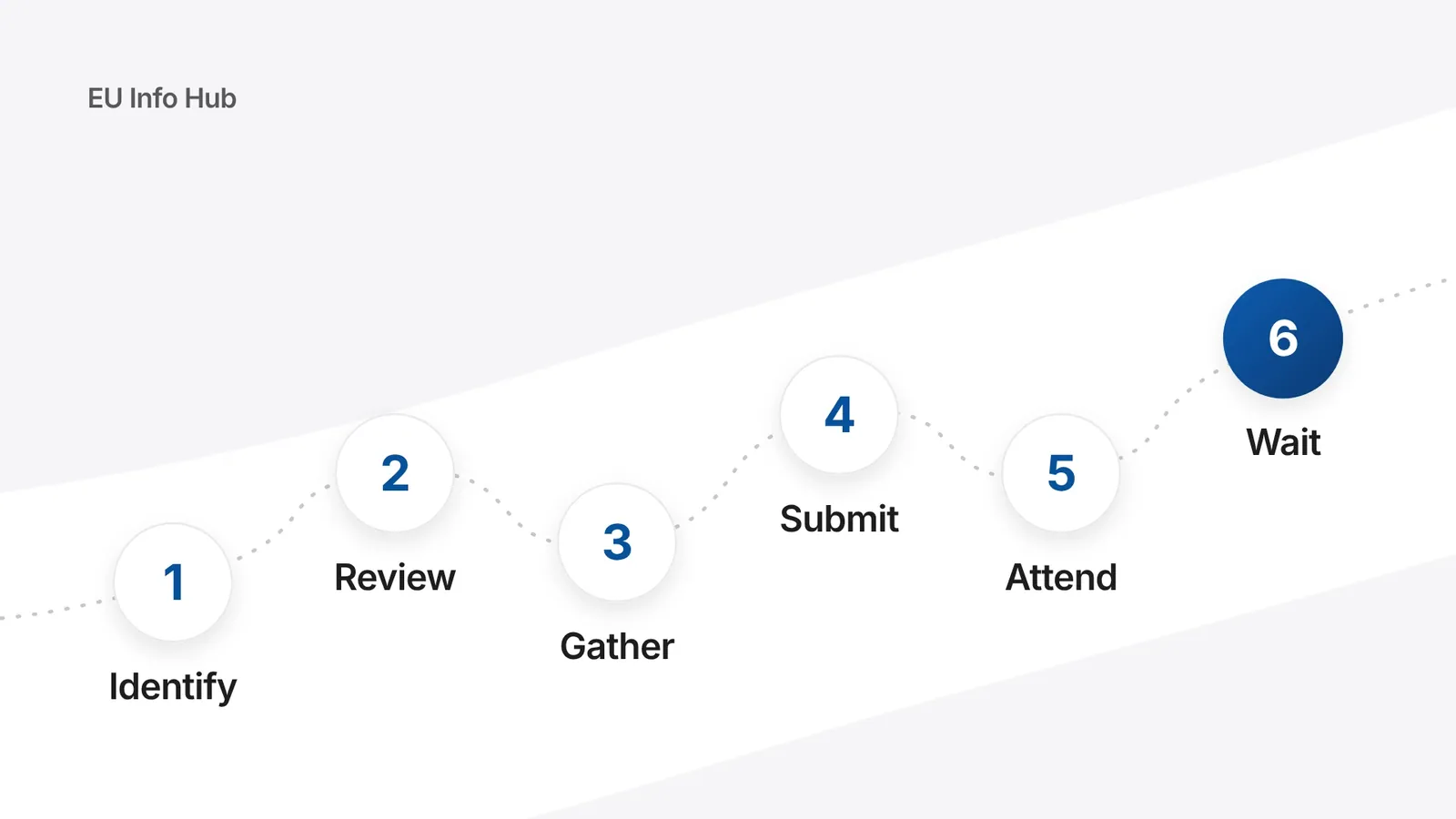
- Check your consulate's checklist and fill in the forms. Complete the national visa form and Form EX-01, and get a passport photo. Requirements differ, for example on translations and loans.
- Check your passport. Files get refused when the passport has under one extra year of validity.
- Order the FBI check first. It is the slowest document because of the apostille.
- Get the federal apostille. Use Form DS-4194 with the State Department.
- Buy compliant health insurance. The certificate should state no copay, no deductible and full coverage.
- Get a medical certificate. This is a doctor's letter, usually dated within the last 3 months, stating you have no disease that could seriously affect public health under the International Health Regulations 2005. Check the exact wording and translation rules on your consulate's checklist, such as the Los Angeles consulate page.
- Gather financial proof. Get 31 December balances, average-balance letters and income statements.
- Translate what your consulate requires. Use a certified translator.
- Write a letter of intent. Say you will live in Spain without working. Avoid wording that suggests remote work.
- Attend the appointment. In LA, bring the Modelo 790-052 fee as a money order, paid on the day.
- Wait for the decision. The legal deadline is 1 month, and silence counts as a refusal. In practice it is often slower (Managora).
For general habits that apply to any country, see our step-by-step guide to applying for an immigration visa.
The FBI background check and apostille
LA requires an FBI criminal record certificate for applicants over 18. It must be no more than 6 months old, carry the federal apostille from the State Department in Washington (a state apostille is not valid) and be translated by a certified translator. LA also asks for police certificates from any other country you lived in during the past 5 years.
Houston's checklist also requires the FBI Identity History Summary with a federal apostille (Integramerica). Some third-party sites say the check is only good for 3 months or 90 days. Plan for the shorter window unless your consulate clearly says otherwise.
If you are refused
You can challenge a refusal within 1 month. Sources disagree on which type of appeal applies, so get a Spanish immigration lawyer involved quickly.
After approval
Collect your visa and enter Spain while it is valid. Once there, book your TIE (foreigner identity card) fingerprint appointment within 1 month of arrival, as the Los Angeles consulate explains. You will usually also need to register on the padrón (your town hall's resident register), which many offices ask for at the TIE appointment. If you plan a scouting trip first, read our guide to ETIAS and EES rules for US citizens.
Do Americans pay tax in Spain on Social Security and 401(k)?
Once you are a Spanish tax resident, Spain taxes your worldwide income. If you meet the 183-day renewal test, you will also count as a Spanish tax resident for that year, so the two rules go together. Under the treaty, Spain generally has the primary right to tax US 401(k) and IRA distributions and private pensions (Costa Luz Lawyers).
General income such as pensions and IRA withdrawals is taxed at progressive rates that start at 19% and reach roughly 47% to 54% at the top depending on your region. Savings income such as interest, dividends and gains is taxed on a separate scale of about 19% to 30% (AEAT). Check current rates with the AEAT or a Spanish tax adviser.
Social Security is the gray area. Spain's tax authority (AEAT) treats US Social Security as taxable for residents, with a deduction for double taxation. The treaty says such benefits "may be taxed" by the paying country, and other firms read it differently (Costa Luz Lawyers). Spain is a country where US Social Security can be paid, so your benefit can follow you (SSA). Tax depends on your own facts, so confirm your case with the AEAT, the IRS or a qualified cross-border tax adviser.
| Income or obligation | Spain | United States |
|---|---|---|
| 401(k), IRA, private pension | Generally taxable, Spain has primary right | Still reported; Foreign Tax Credit can offset |
| Social Security | AEAT says taxable with double-tax deduction (disputed) | US keeps a taxing right under treaty wording |
| Annual return | Required as a tax resident | Required every year for US citizens |
| Foreign account reporting | Modelo 720 if foreign assets in a category exceed EUR 50,000 (filed January to March) | FBAR over USD 10,000; Form 8938 above thresholds |
Your US filing does not stop
US citizens keep filing US returns abroad, and the Foreign Tax Credit and treaty relieve double taxation. Form 8938 is required if you live abroad and your specified foreign financial assets exceed USD 200,000 at year-end or USD 300,000 at any time during the year (single). Married couples filing jointly have double those thresholds: USD 400,000 and USD 600,000. You count as living abroad with a foreign tax home and 330 days abroad in 12 months (IRS).
The FBAR (FinCEN Form 114) is separate. You file it if your foreign accounts together exceeded USD 10,000 at any time in the year, and it goes to FinCEN, not the IRS. A Spanish bank account holding your living money will usually trigger it (Arc & Ledger).
Spain has its own reporting. Once you are tax resident, you generally file Modelo 720 between January and March if your bank accounts, securities or property abroad exceed EUR 50,000 in any category (AEAT). Confirm with the AEAT or a Spanish tax adviser. Larger estates may also owe regional wealth tax or the solidarity tax on large fortunes, and the same adviser can tell you which apply.
Spain non-lucrative visa renewal and the 183-day rule
Under Royal Decree 1155/2024, in force since 20 May 2025, renewal requires proof that you actually lived in Spain for more than 183 days in the calendar year. Holding insurance and a Spanish bank account is no longer enough (De la Guía Luzón).
Counting your days: an example
Say you live in Spain during 2028, a leap year with 366 days.
- Summer in the US, 1 June to 30 September: 30 + 31 + 31 + 30 = 122 days away.
- Three weeks home for Christmas: 21 days away.
- Days in Spain: 366 minus 122 minus 21 = 223. That clears the bar.
Add a 6-week spring trip (42 days) and you drop to 181 days, which fails. Keep boarding passes and a travel log, because you need evidence, not memory.
The rule refers to the calendar year, not your permit year. If you arrive in, say, September, you cannot reach 183 days that year, and practitioners report offices handle this inconsistently. Ask a Spanish immigration lawyer how your office applies it before you plan long trips.
The long-term path
Your first permit lasts 1 year. After that, a renewal is granted for 2 years (art. 64.7 of RD 1155/2024 in the BOE), so you typically renew twice before applying for long-term residence at 5 years (Vamos Spanish). Some sources say permits now renew for 4 years, but that applies to work permits, not the non-lucrative permit. Each renewal depends on meeting the residence test again.
Common mistakes at Spanish consulates in the US
These are the refusal causes practitioners report most often (Costa Luz Lawyers):
- The wrong health policy. Copays, a deductible, a "Spain exclusion" or travel insurance will sink the file.
- Large recent deposits. A sudden transfer looks like borrowed money.
- Too few months of statements. LA wants the 31 December balance and the yearly average.
- An expired FBI check. Apostille delays eat the validity window.
- A state apostille, or an edited FBI PDF. Get the federal apostille on the FBI's own complete report.
- Missing translations or a missing medical certificate.
- The wrong consulate. You apply where you legally reside.
- Signs you plan to work. An active LinkedIn profile, freelance contracts or remote work raise doubts. Scrutiny reportedly tightened in 2025.
- A passport with under one extra year of validity.
- A careless letter of intent that hints at earning income.
- Applying at the exact minimum. A small currency move can push you under.
Frequently asked questions
Can I work remotely for a US company on the non-lucrative visa?
No. The Chicago consulate states the visa is for living in Spain without gainful activity, professional services or working online, and it does not act as a work permit. Remote work signals, such as freelance contracts or an active job profile, are a reported refusal reason. If you want to keep earning, look at Spain's digital nomad route, which requires about EUR 34,188 a year in 2026.
How much money does a couple need to retire in Spain in 2026?
A couple needs at least EUR 36,000 a year, or EUR 3,000 a month. That is EUR 28,800 for the main applicant plus EUR 7,200 for the spouse, based on the IPREM, which stays frozen at EUR 600 a month in 2026. Each child adds another EUR 7,200. Showing more than the minimum is safer, because thin evidence is a common reason for refusal.
Is US Social Security taxed in Spain?
It is disputed. Spain's tax authority treats US Social Security as taxable for residents, with a deduction to avoid double taxation. The treaty says such benefits "may be taxed" by the paying country, and some advisers argue it is taxable only in the US. Because the answer affects your budget, get advice from a cross-border tax professional and report the income correctly on both returns.
Can I apply if I live outside the US?
Generally you apply at the Spanish consulate that covers your place of legal residence. If you live in Mexico, Canada or another country, that usually means the Spanish consulate there, not one in the US. Each consulate sets its own checklist, so contact the one covering your country before gathering documents. You will also need police certificates from any country you lived in during the past 5 years.
Is my Roth IRA tax-free in Spain?
Not guaranteed. A Roth IRA is tax-free in the US when you meet the rules, but Spain does not automatically follow US treatment. Spain may tax the growth when you withdraw it, since it taxes residents on worldwide income. Before you move, or before you take large withdrawals, get advice from someone who knows both the US and Spanish systems.
When can I get Spanish citizenship?
For Americans, Spanish citizenship is generally reported to require 10 years of legal residence, along with a formal requirement to renounce your previous nationality. That matters if you want to stay a US citizen. Most retirees aim for long-term residence at 5 years instead. Check the current rules with Spain's Ministry of Justice or a Spanish lawyer before you plan around citizenship.
References
- Spanish Ministry of Foreign Affairs, Consulate in Los Angeles: Non-working (Non-lucrative) residence visa
- Spanish Ministry of Foreign Affairs, Consulate in Chicago: Non-lucrative Residence Visa (NLV)
- BOE: Royal Decree 1155/2024 (consolidated text)
- AEAT (Spanish Tax Agency): Electronic office
- BLS Spain Visa, Miami: National Non-Working Residence Visa
- IRS: Summary of FATCA reporting for U.S. taxpayers
- US Social Security Administration: Agreement Between the United States and Spain
- US Social Security Administration: Your Payments While You Are Outside the United States
- Your Overseas Home: Spain IPREM 2026
- Pellicer Heredia: Non-Lucrative Visa Spain 2026
- Managora: End of the golden visa, alternatives in Spain 2026
- Vamos Spanish: Spain Immigration Law Changes 2026
- Lawsentis: Spain Non-lucrative Visa Common Mistakes 2026
- Greenback Tax Services: Spain Non-Lucrative Visa for Americans
- Health Insurance for Spanish Visas: NLV health insurance 2026
- Integramerica: Which U.S. documents usually need apostilles for Spain
- Costa Luz Lawyers: US-Spain Tax Treaty Explained 2026
- Costa Luz Lawyers: Spanish Tax Rates for Pensioners 2026
- Costa Luz Lawyers: Non-Lucrative Visa Spain Checklist 2026
- Arc & Ledger: FBAR & FATCA Filing Guide 2026
- De la Guía Luzón: Renewal of non-lucrative residence permit (183-day rule)

Muhammad Sahil
Founder and editor of EU Info Hub. Digital marketer with over seven years of freelance experience, now studying economics and business in Europe. He has been through the residence permit process himself. This article is general information, not legal or financial advice. Always confirm details with the relevant consulate or authority.