Irish citizenship through a great-grandparent usually works in only one situation: your parent must have been on the Foreign Births Register before you were born (older pre-1986 registrations can work differently). If your parent registered in time, you can register too. If your parent registered after your birth, or never registered, the answer is usually no.
Many Irish Americans are surprised by this. They have a great-grandfather from Cork or Mayo and assume the bloodline is enough. It isn't. The date is what matters. This guide gives you a clear yes or no test, worked examples with real dates, the exact steps and fees, and realistic options if the door is closed.
Key facts at a glance
| Question | Short answer (as of November 2026) |
|---|---|
| Can a great-grandparent qualify you? | Yes, but only if your parent was registered on the Foreign Births Register before you were born |
| Parent registered after you were born? | No, if your parent registered after 30 June 1986. Registrations on or before that date worked differently (see Born before 1986) |
| Great-great-grandparent? | Never gives an entitlement |
| Fee | €278 for adults, €153 for under-18s |
| Processing time | About 12 months from a complete application |
| When you become a citizen | On the date you are entered in the register, not your birth date |
| Main alternative if you don't qualify | Naturalization, which requires living in Ireland |
The Irish citizenship great grandparent test in one question
The test is simple: was your parent already registered on the Foreign Births Register on the day you were born? If yes, you can apply. If no, you generally cannot claim through your great-grandparent.
Citizens Information, the Irish government information agency, says a great-grandchild born outside the island of Ireland is entitled to Irish citizenship through the Foreign Births Register only if their parent was already registered by the time of the applicant's birth (Citizens Information). In this chain, your parent is the grandchild of the Irish-born ancestor.
The same agency states the general limit plainly: unless a parent or an Irish-born grandparent was an Irish citizen when you were born, you have no automatic right to Irish citizenship based on ancestors further back. So the great-grandparent route is really a "registered parent" route.
Quick eligibility checklist for a great-grandparent claim
- Your great-grandparent was born on the island of Ireland.
- Your parent (that ancestor's grandchild) registered on the Foreign Births Register.
- Your parent's registration happened before your birth date.
- You can still get your parent's registration certificate.
If you tick all four, you are likely eligible. If the third one fails, you are not, unless you were born before 1986 and your parent registered on or before 30 June 1986 (see below).
Citizenship law depends on your exact family facts, so confirm your own case with the Department of Foreign Affairs and Trade or a qualified Irish solicitor before you spend money on documents.
What if my parent never registered?
If your parent never registered, you cannot use your great-grandparent. If your parent registers now, after you were born, it still does not help you.
This is the point that disappoints the most people. The Department of Foreign Affairs says children born before a person was registered are not eligible through that person, because that person was not yet a citizen when the child was born (LegalHelp, quoting the Department of Foreign Affairs). Registration only works forward in time.
My mom registered last year. Can I register too?
Probably not. Say your mother registered in 2025 and you were born in 1990. She became an Irish citizen on her registration date in 2025, so she was not a citizen in 1990. You fall outside the rule.
Can my parent register now so my children can claim?
Usually no. Your children would need you to be an Irish citizen first, and you cannot register through a parent who registered after your birth. Your parent registering now mainly helps your parent and any of their children born after the registration date.
How do I find out if my parent is already registered?
You have to ask the family. The Foreign Births Register cannot be searched publicly, so families should keep their registration certificates, and a later generation needs the parent's certificate to prove the registration came before their birth (Fragomen). Check old files, safe deposit boxes and relatives who handled your parent's paperwork.
Born before 1986? Older rules can work differently
If you were born before 1986, the simple "registered before you were born" test may not tell the whole story. Registrations made on or before 30 June 1986 had retrospective effect.
Under the older rules, people registered on or before 30 June 1986 count as citizens from their date of birth, or from 17 July 1956 if they were born earlier. Anyone registered after that date is a citizen only from the date of registration (Wikipedia, citing the Irish Nationality and Citizenship Acts).
The Department of Justice's eligibility guide says that for a great-grandparent claim, your parent must have registered on the Foreign Births Register between 1956 and 1986, and if you were born after 1986, your parent must have registered before you were born (Irish Immigration Service Delivery). The same guide confirms you become an Irish citizen on the date of your own registration.
In practice, a parent who registered in, say, 1982 may count as a citizen from their own birth date. That could help a child born in 1978, even though the registration came later. These older cases are exactly where you should get a written answer from the Department or a solicitor instead of guessing.
Worked examples: does your family qualify?
The easiest way to apply the rule is to compare two dates: your parent's registration date and your birth date. Here are common American family situations.
| Family situation | Parent's FBR registration | Your birth | Can you register? |
|---|---|---|---|
| Great-grandfather born in Galway, grandparent and parent born in the US | Never registered | 1988 | No |
| Same family, parent registered later in life | 2023 | 1992 | No |
| Parent registered in their twenties | 14 March 2019 | 2 August 2021 | Yes |
| Older family history | 1982 | 1978 | Possibly, under pre-1986 rules (confirm) |
| Only Irish link is a great-great-grandparent | Any | Any | No |
Example: one family, two different answers
Picture a family in Boston. The father's grandmother was born in County Kerry. The father registered on the Foreign Births Register on 14 March 2019. He has two children: a son born in 2017 and a daughter born on 2 August 2021.
The daughter qualifies, because her father was a registered Irish citizen about 2 years and 5 months before she was born. The son does not, because his father was not yet a citizen in 2017. Same parents, same ancestor, different result. Siblings are often split this way, and there is no appeal that fixes it.
Example: cost and timing for eligible siblings
Say two adult siblings and one 16-year-old sibling all qualify. As of 2026, the Foreign Births Register fee is €278 for adults and €153 for under-18s (Citizens Information). The adult fee is made up of €270 for registration and the certificate plus €8 non-refundable postage and handling (GetMeIrish). The total is €278 + €278 + €153 = €709. The fee is set in euros, so the dollar amount on your card statement depends on the exchange rate on the day you pay.
Citizens Information says the current expected processing time for Foreign Birth Registration is 12 months (Citizens Information), counted from receipt of a complete application with all correct documents (thenextpassport.com, quoting DFAT). If the family's complete packet arrives in Dublin in January 2027, a realistic target for the certificates is around January 2028, with passports applied for after that. Individual cases vary.
How to apply for Irish citizenship by descent through a great grandparent
You apply and pay online, then mail a signed paper form with original documents. The passport is a separate application you make only after your registration is approved.
- Get your parent's registration certificate. This proves your parent was registered before your birth. Without it, the application stalls.
- Collect civil documents for three people. A great-grandparent application needs original documents for you, the parent you claim through and the Irish-born ancestor (LegalHelp), plus your parent's Foreign Births Register certificate. If your parent became Irish by naturalization instead, ask the Department which documents apply.
- Find the right record for an old ancestor. Civil birth registration began in Ireland in 1864, and a baptismal certificate is accepted for an Irish-born ancestor born before then (FedLaws, citing the Department of Foreign Affairs).
- Fill in the online form and pay. Applications start at fbr.dfa.ie, where you pay the fee, and the form is then printed out (thenextpassport.com).
- Sign in front of an approved witness. The witness must come from an approved profession, know you personally and not be a relative. They sign and stamp the form, sign and date two photos and certify your ID copy (GetMeIrish).
- Post the packet. Send the signed form, photos and original documents by mail.
- Wait about 12 months. There is no online tracker for Foreign Birth Registration.
- Apply for the passport. Once you receive your registration certificate, apply separately at passportonline.dfa.ie.
The Department is now styled the Department of Foreign Affairs and Trade (DFAT), but eligibility and fees did not change, and the application site is still fbr.dfa.ie as of November 2026. Citizens Information explains that you become an Irish citizen once you are entered on the register, and only then can you apply for a passport (Citizens Information). Sending the form does not make you a citizen. For the full document list across all descent routes, see our guide to Irish citizenship by descent for Americans.
If you plan to have children
Register before your children are born. Children born after you register can apply through you, and children born before cannot (irishcensus.com). An expectant parent who is not yet on the register when the child is born cannot pass citizenship to that child, so mark the form clearly as an expectant-parent application, and an urgent request can be made (Fragomen).
Common mistakes Irish Americans make
Most failed great-grandparent claims come down to dates and paperwork, not ancestry. These are the errors that cost people the most time and money.
- Assuming bloodline is enough. A great-grandfather born in Ireland means nothing on its own. Your parent's registration date decides the case.
- Having a parent register "for you" now. It feels like a fix, but a parent who registers after your birth (and after 30 June 1986) cannot pass citizenship to you.
- Ordering documents before checking eligibility. Irish baptism records and certified US copies take time and money. Confirm the date test first.
- Losing the parent's certificate. The register is not public, so the family copy is often your only proof.
- Using a relative as the witness. The witness cannot be related to you, and must know you personally.
- Booking travel around a passport you don't have yet. Plan on roughly 12 months for registration, then a separate passport application.
- Waiting until after a baby arrives. If you qualify, register before you have children so they qualify too.
- Trying a great-great-grandparent claim. A great-great-grandparent never gives an entitlement (Stampwise).
Are there other routes for Americans?
Yes, but none of them give you citizenship by descent. If your only Irish link is a great-grandparent and your parent was not an Irish citizen when you were born, the Foreign Births Register is closed to you, and naturalization, which requires living in Ireland, is the remaining route to citizenship (Stampwise).
The government's Certificate of Irish Heritage, a commemorative document with no legal rights, was discontinued in 2015, so be wary of any site selling one as official.
| Option | Who it suits | Gives citizenship? |
|---|---|---|
| Naturalization | People willing to live in Ireland for years | Yes, after residence requirements |
| Working Holiday Authorisation | US students and recent graduates | No, up to 12 months of living and working |
| Studying in Ireland | People admitted to an Irish course | No, but you live there legally |
| Another country's descent route | Families with other European ancestry | Possibly, depending on that country |
Working Holiday Authorisation
Ireland's Working Holiday Authorisation lets eligible US citizens over 18 live and work in Ireland for up to 12 months without a work permit, and applicants must be current full-time third-level students or have graduated within the previous 12 months (Consulate General of Ireland, Chicago). It is a reciprocal program, not a visa. As of November 2026, the application fee is $295 at every Irish consulate and the embassy. Return postage of roughly $13 to $21 is added at some offices, so check your own consulate's page (Consulate General of Ireland, New York). Holders must register with the Immigration Office or their nearest Garda station within 90 days of arrival (Ireland.ie). The Embassy of Ireland USA also covers the program.
Studying, then staying
For many younger Irish Americans, a degree in Ireland is the most practical way to live there. Start with our Ireland student visa application checklist. If you are thinking about a longer move on savings or remote income, check your income with our Europe visa income checker to see which countries' residence rules you could meet.
Other European ancestry
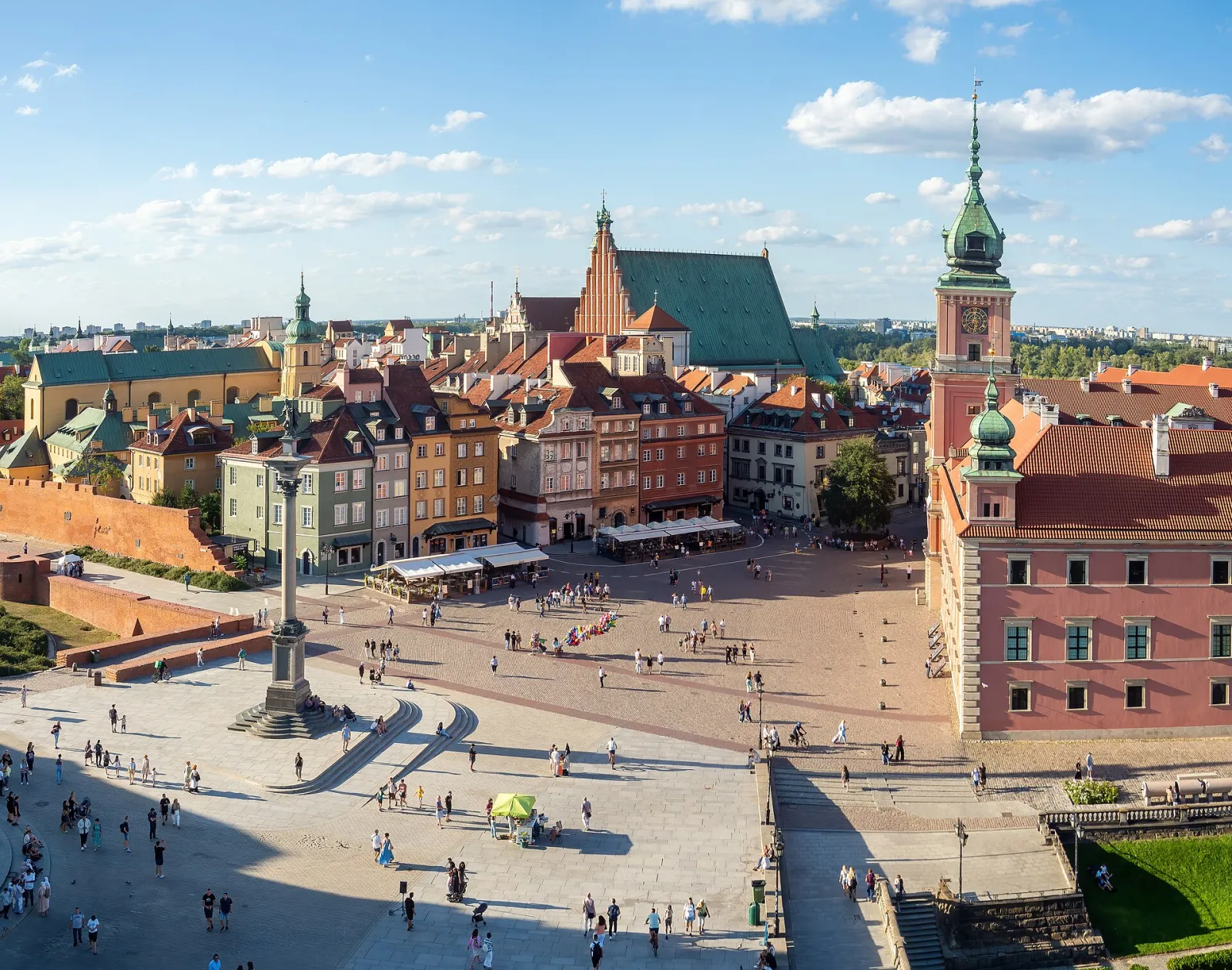
Many Irish American families also have German, Italian or Polish roots, and those countries have their own descent rules. Compare Italian citizenship by descent, German citizenship by descent and the Polish passport by descent.
Planning an ancestry trip instead
Since 8 January 2025, Americans need a UK Electronic Travel Authorisation (ETA) to visit Northern Ireland, even when crossing overland from the Republic. It costs £20 (since 8 April 2026) and lets you make multiple visits over two years, or until your passport expires if that comes first (GOV.UK). No ETA is needed for the Republic of Ireland. If your great-grandparent's townland is in the North, apply before you go, and use our passport validity checker to confirm your US passport is good for the trip.
Is Irish citizenship by descent changing in 2026?
No change to citizenship by descent has been announced. The 2026 proposals cover naturalization only.
On 21 September 2026 the Department of Justice, Home Affairs and Migration published the General Scheme (an outline) of the Irish Nationality and Citizenship (Amendment) Bill 2026 on gov.ie. It proposes raising the residence needed for naturalization from 5 to 8 years (3 to 5 for spouses of Irish citizens) and adding language, civics and self-sufficiency tests. As of November 2026 the full bill has not been published or passed, and none of these changes is law. Read the General Scheme itself on gov.ie for the exact proposals. Descent and the Foreign Births Register are not affected (Ferry Solicitors).
If naturalization is your backup plan, this matters. An American planning to move to Dublin in 2027 should plan for the possibility of needing 8 years of reckonable residence, not 5, and watch for the final bill.
Frequently asked questions
Can you get Irish citizenship through great grandparents?
Yes, but only if your parent, who is the grandchild of the Irish-born ancestor, was registered on the Foreign Births Register before you were born. If your parent registered after your birth or never registered, you cannot claim through your great-grandparent. People born before 1986 whose parent registered on or before 30 June 1986 may fall under older rules and should confirm with the Department of Foreign Affairs and Trade.
My parent registered on the Foreign Births Register after I was born. Can I still apply?
Generally no. Registration makes a person an Irish citizen from the registration date, so a parent who registers after your birth was not a citizen when you were born. The Department of Foreign Affairs says children born before a parent's registration are not eligible through that parent. The exception involves registrations made on or before 30 June 1986, which had retrospective effect.
Can I use a great-great-grandparent for Irish citizenship?
No. A great-great-grandparent never gives an entitlement to Irish citizenship by descent. If that is your only Irish link, the Foreign Births Register is closed to you, and the remaining route to citizenship is naturalization, which requires living in Ireland. You can still look at Ireland's Working Holiday Authorisation or studying in Ireland as ways to live there legally for a while.
How much does Irish citizenship through a great grandparent cost and how long does it take?
As of 2026, the Foreign Births Register fee is €278 for adults and €153 for under-18s, including €8 for postage and handling. Citizens Information gives a current expected processing time of 12 months, counted from receipt of a complete application with correct original documents. The Irish passport is a separate application with its own fee, made only after registration.
Do I have to give up my US citizenship to become Irish?
No. Ireland does not require you to give up US citizenship when you register on the Foreign Births Register, and the United States allows dual nationality (Citizens Information). You can hold both an Irish passport and a US passport. Keep using your US passport to leave and enter the United States, and use your Irish passport for living, working or traveling in the EU.
Does a great-grandparent born in Northern Ireland count?
Yes. Birth anywhere on the island of Ireland counts, including Northern Ireland (Citizens Information), so a great-grandparent born in Belfast or County Antrim works the same way as one born in Cork. The same rule still applies to you: your parent must have been on the Foreign Births Register before you were born.
What if my parent was registered before I was born but has since died?
You can still claim. Your entitlement depends on your parent's status when you were born, not on whether they are alive now. Send your parent's Foreign Births Register certificate with your application, along with your own documents and the Irish-born ancestor's records. Include their death certificate if the Department asks for it. Search family papers early, because the register cannot be searched publicly.
My grandparent was born in the US to an Irish-born parent. Was my grandparent automatically Irish?
In most cases, yes. A child born abroad is automatically an Irish citizen if their parent was born on the island of Ireland and was an Irish citizen at the time of the birth, with no registration needed. That gives you nothing on its own, though. For a great-grandchild claim, your own parent must have been registered on the Foreign Births Register before you were born.
References
- Citizens Information: Irish citizenship through birth or descent
- Citizens Information: Foreign Births Register
- Citizens Information: Entitlement to Irish citizenship
- Irish Immigration Service Delivery: Irish Citizenship Eligibility Guide (PDF)
- Ireland.ie, Consulate General of Ireland Chicago: Working Holiday Authorisation
- Ireland.ie, Consulate General of Ireland New York: Working Holiday Authorisation
- Ireland.ie, Department of Foreign Affairs: US-Ireland Holiday Working Agreement
- Department of Foreign Affairs, Embassy of Ireland USA: Working Holiday Authorisation
- GOV.UK: Apply for an electronic travel authorisation (ETA)
- Ferry Solicitors: Irish Citizenship Rules Are Changing
- Fragomen: Foreign Birth Registration, How to Claim Irish Citizenship Through Ancestry in 2025
- Stampwise: Irish Citizenship by Descent, Who Qualifies
- LegalHelp: Foreign Birth Register, Eligibility, Documents, and Fees
- LegalHelp: Ireland's Foreign Births Register, Eligibility, Documents and Fees
- thenextpassport.com: Irish Citizenship Processing Times (2026)
- thenextpassport.com: Irish Foreign Birth Registration Step-by-Step Guide
- GetMeIrish: What Is the Foreign Births Register?
- FedLaws: Foreign Births Register Eligibility, Documents and Processing
- irishcensus.com: Irish Citizenship by Descent
- Wikipedia: Foreign Births Register

Muhammad Sahil
Founder and editor of EU Info Hub. Digital marketer with over seven years of freelance experience, now studying economics and business in Europe. He has been through the residence permit process himself. This article is general information, not legal or financial advice. Always confirm details with the relevant consulate or authority.